
From Resident to Mentor: STLTR graduates step into new role
One of the most important elements of the St. Louis Teacher Residency model is that from day 1, every single one of our teaching residents is paired with a mentor to support them throughout the program. These mentors are expert teachers who help provide critical feedback, support, and guidance for our residents.
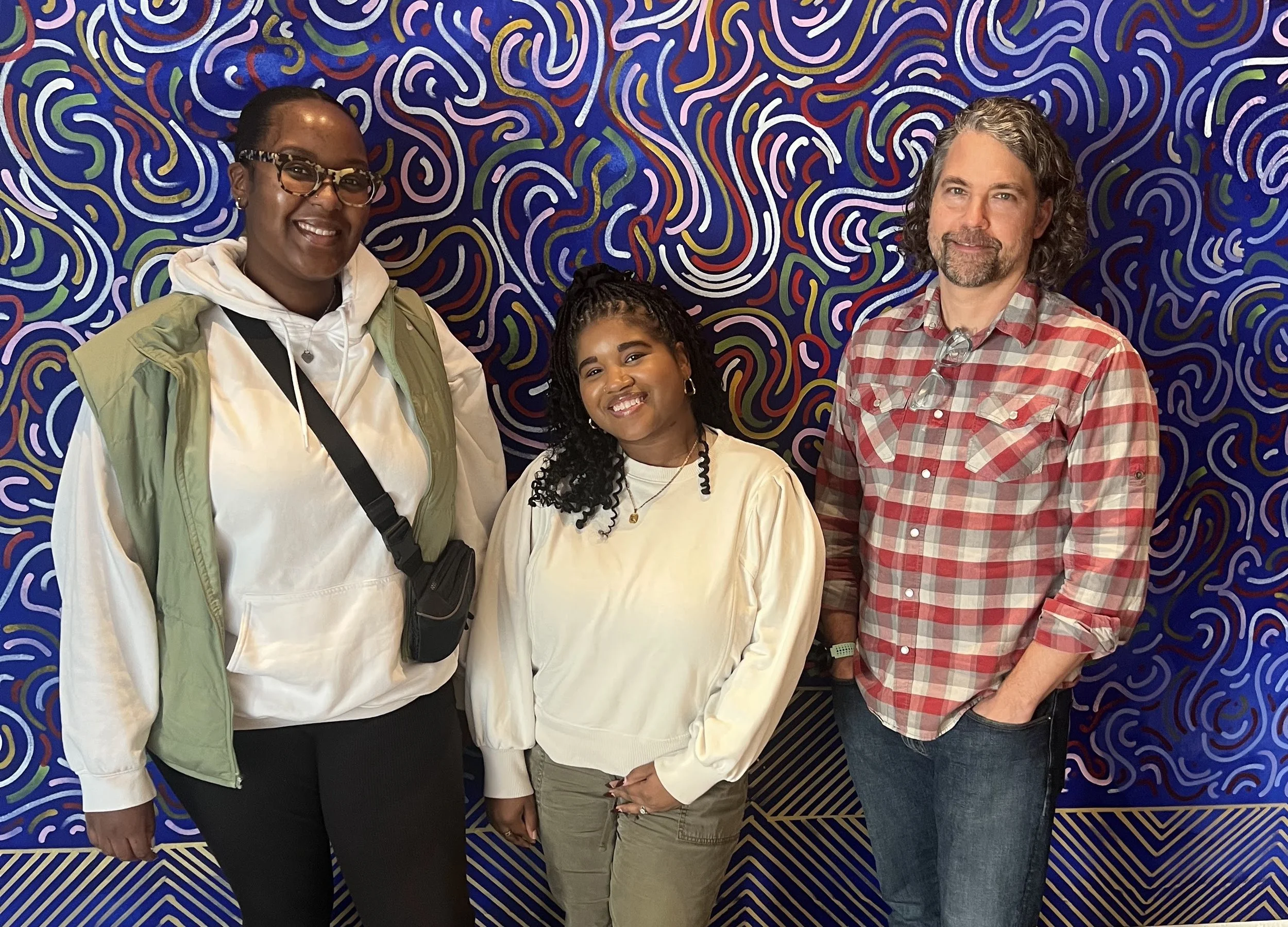
Three of STLTR’s former residents, who have stepped into new roles as mentor-teachers. From left: Jetaune Hall, Grade 6 Science at Busch Middle School; Desiree Buchannan, Grade 4 at KIPP: Wisdom; and Jeff Konkel, Grade 8 ELA at KIPP: Inspire
STLTR is now halfway through our fifth year, which means our first cohorts of residents are now well into their careers as classroom teachers. This has allowed us to intentionally recruit these former residents to come back and work with us again, this time as mentors themselves. We have found that when our mentors are already intimately acquainted with our model and have recently completed the residency experience, they can provide even more valuable feedback, support, and empathy.
We are so grateful to our residents-turned-mentors for their dedication to STLTR. We recently sat down with three of them, Jetaune Hall, Desiree Buchannan, and Jeff Konkel to ask them some questions about their experience as mentors.
Why did you join the residency?
Jetaune: I was working in St. Louis, and I thought I might be interested in teaching. I always had a passion for working with kids, and I knew I wanted to give more students the opportunity to have teachers who look like them. I was doing research on teacher programs, and St. Louis Teacher Residency came up on Google. This was the one that most aligned with my own values, and with what I thought was a good fit for me.

Desiree Buchannan
Desiree: I have always felt that all kids deserve an opportunity to earn a quality education. Around the time I found STLTR, I was thinking, what am I doing to push toward a cause I believe in, and that is uplifting my community? I asked myself, “Do you really want to go into the classroom?” I was in this really deep conversation with myself. I knew I couldn’t afford to completely quit my job and teach for free, so the financial incentives with STLTR were appealing. I also liked the idea of having a mentor, someone who would show me the ropes.
Jeff: I spent more than 20 years working in corporate communications, and I just decided that for the second half of my career, I was going to do something more meaningful. Around this time, my son was going through middle school, which reminded me how much I hated middle school. So I thought, if I’m going to do something meaningful, on behalf of my son, I would look at a couple of teaching programs. Most of the options didn’t fit my interests or goals. But I had a friend of mine who worked at [STLTR partner] Washington University, and they told me about this program.
What made you interested in becoming an STLTR mentor?
Jeff: I had a really good experience with my mentor. Since I started working with the residency, my school has become more stable, and I believe the residency played a part in that. Overall, the residency has been better for my school, better for my co-workers, and ultimately, better for my students.
How did your experience as a resident inform your work as a mentor?
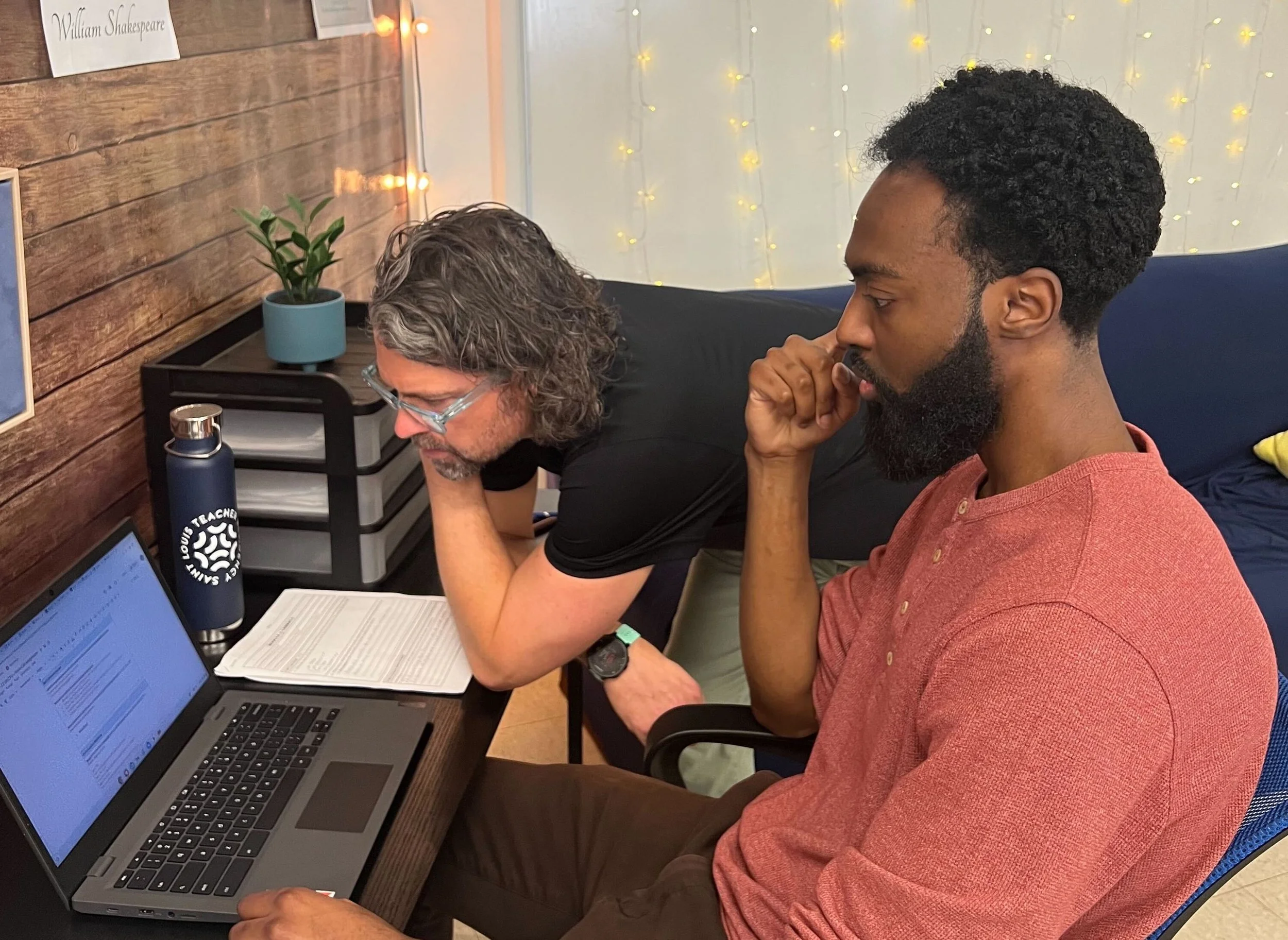
Jeff Konkel (Cohort 2018) works with resident Marquise Jackson as the create plans for their 8th grade English classroom at KIPP: Inspire.
Jetaune: As someone who has just finished the residency, I can easily relate to the experience of the current residents. I know how the residency defines effective teaching and the skills my residents would need to become an effective teacher, because I’ve done it myself. I know where you should be at any given point in the school year, I know how to be supportive, because I can say, “Oh, I remember that, here is how I did it.” Having that firsthand experience is so helpful.
Desiree: Being a resident and now being a mentor makes it easier for me to have some of those tougher feedback conversations. I can say truthfully, “I was you at one point, and I know you’re going to get past whatever challenge you’re facing.”
Jeff: For me, the insight into the boom and bust of the residency cycle – other mentors may not be aware of what’s happening behind the scenes for residents. On the other hand, I know, “OK, I know you have your hands full right now, and I can help support you when you’re overwhelmed.” One of the ways the residency creates such strong teachers is that the program leaders keep their foot on the gas, and it can be a lot of work for residents. As a mentor, having been a resident helps me know when to be a critic, and when to be a cheerleader.
Jetaune: For me, being a mentor has also really helped me grow as a leader. In an introvert — teaching is the most extroverted thing I do — and I’m learning a lot about how to communicate, how to respond to what someone else needs.