
MATL Capstone Presentations
This spring, our inaugural cohort finished their first academic year as lead-teachers! We are incredibly proud of their hard work and dedication, especially as they faced unprecedented challenges due to Covid-19 and school closures. We celebrated with the cohort as they reflected on their experiences during their Capstone Oral Defenses. These presentations were the culminating task from the year-long Capstone Seminar, part of their Master of Arts in Teaching and Learning at Washington University.
In the required Capstone portfolio, residents collect artifacts and evidence to demonstrate their proficiency in the skills and competencies required of highly-effective teachers, as outlined in our organization’s Vision for Effective Teaching evaluation rubric. The oral defense is a formal presentation in which teachers justify the goals they set for their classroom, and synthesize their students' progress toward these goals. They reflect on the levers that aided their students’ growth, and analyze the skills or knowledge they will need to develop to improve their teaching and student outcomes in the subsequent school years.
As an outcomes-based program, the Capstone Defense reinforces the central role of the teacher in driving toward student outcomes. In our coursework and practice, we emphasize that our teachers must establish a goal-driven classroom. They must set ambitious student learning goals, invest students and their families in the importance of meeting these goals, support students toward the goals, and continually evaluate and adjust their practice in alignment with these goals. The Capstone Defense also plays an important role in the cycle of learning and improvement. By asking teachers to reflect on both their successes and the areas of improvement, we hope to reinforce their agency in driving student outcomes.
Overall, our residents set ambitious and individualized goals for their students, and helped drive gains in student learning. To sample just a few of the inspiring outcomes our residents achieved in their classrooms:
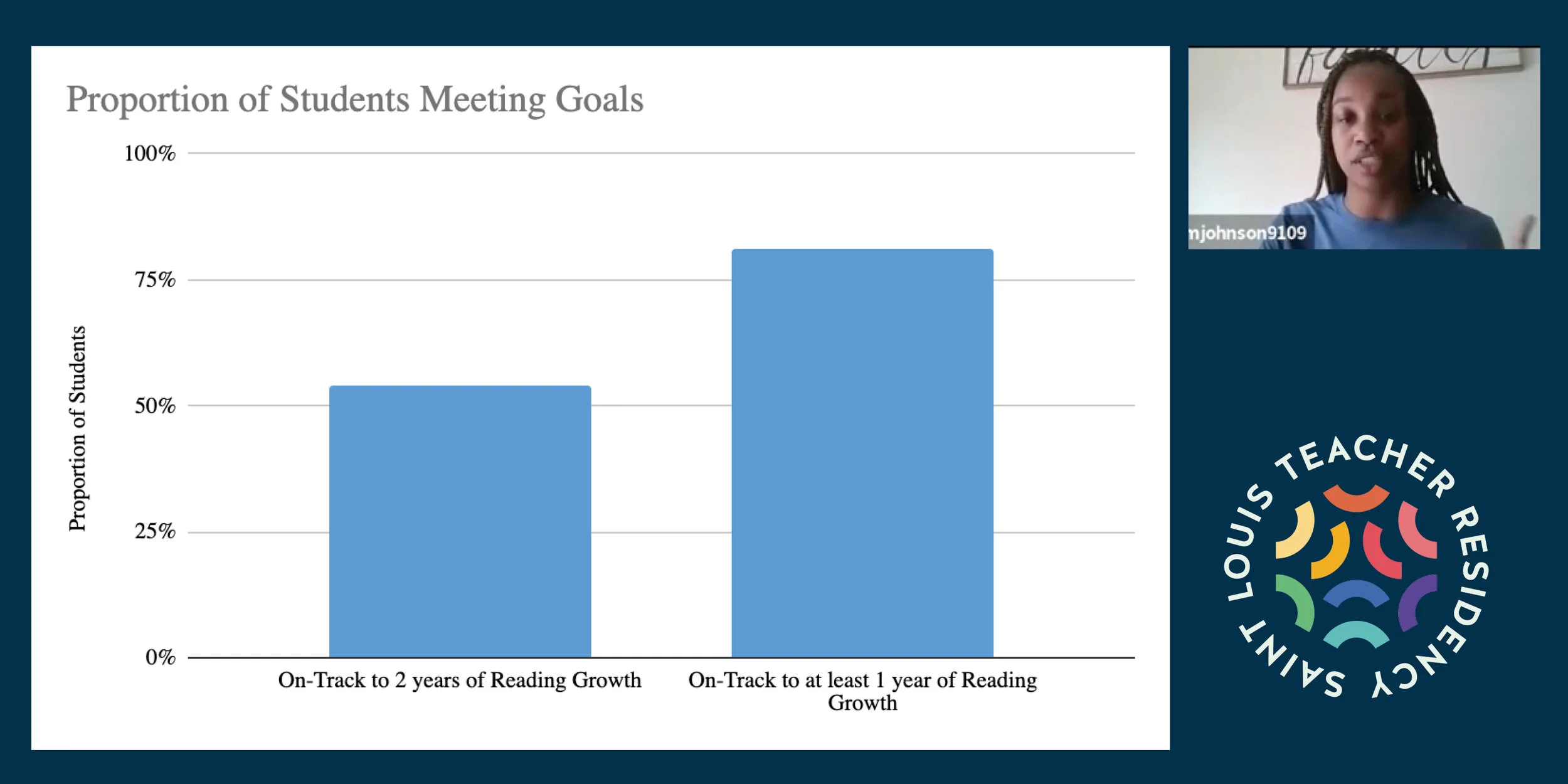
Michala Johnson, 3rd Grade at Herzog Elementary, SLPS:
Only two students entered Ms. Johnson’s class on grade level in reading. However, prior to the school closures, over half of her class was on track to grow at least two grade levels in reading, based on the Fountas and Pinnell reading assessment, and nearly all of her students made at least one year of growth.
Josh Humphrey, 9th grade Algebra, KIPP: St. Louis High School:
Mr. Humphrey’s students scored, on average, in the top 5 schools across all Kipp high schools in the country on their benchmark assessment of learning. These benchmarks are predictive of success on the ACT.
Jessica Turner, 1st grade at Gateway Science Academy South:
Ms. Turner’s students entered 1st grade needing remediation in many of the Kindergarten math skills. Using diagnostic data, Ms. Turner built time for remediation into her plans, while also moving forward with teaching the 1st grade math standards. By the end of the year, she had covered all 1st grade standards, with an average student mastery of 89%.
We are incredibly proud of the work that our residents do each and every day. Each resident has a story to tell, and we are looking forward to reflecting on how this story will evolve as they move into the next school year!