
Resident Spotlight: Marlene Traub
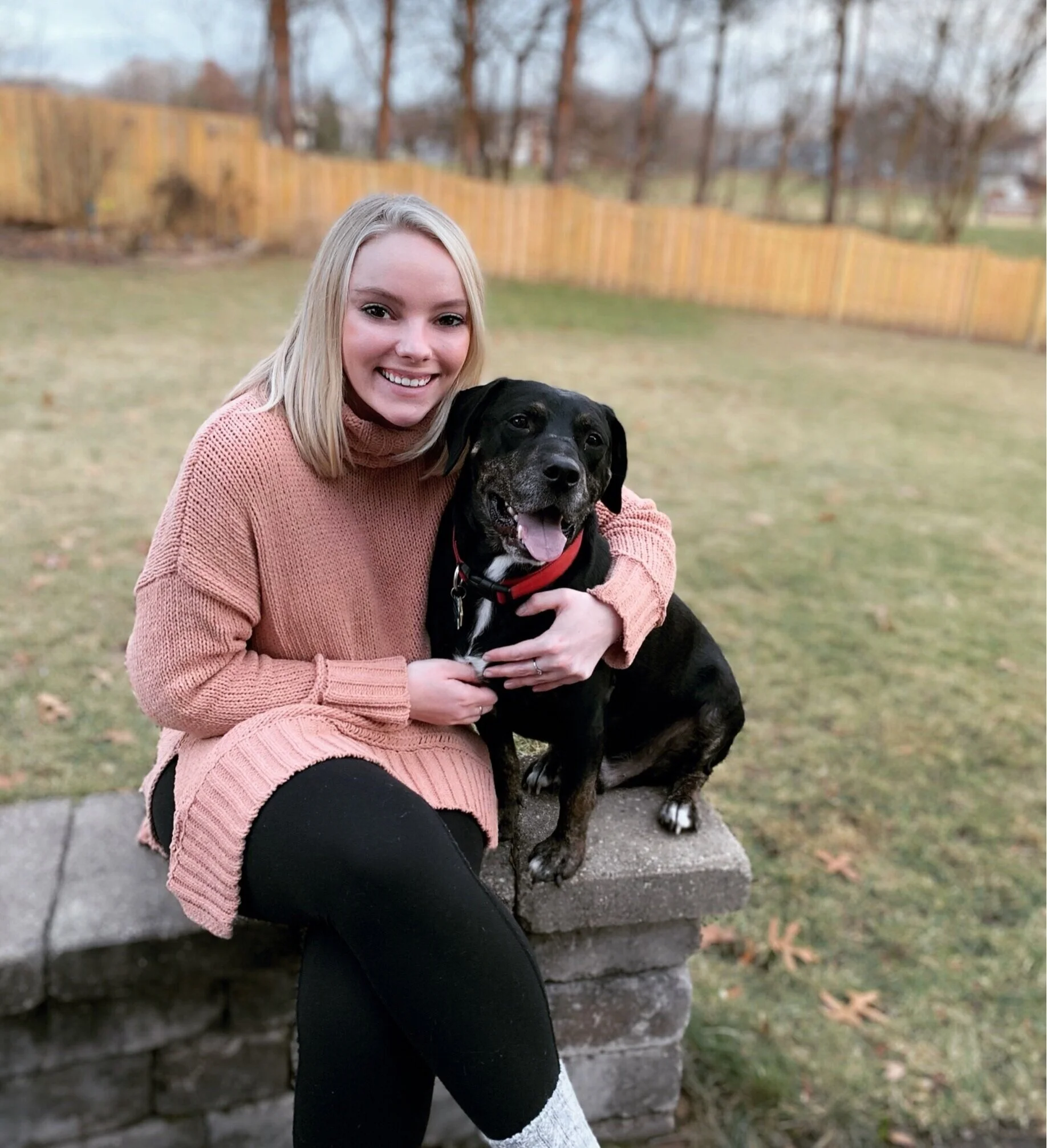
This quarter we are spotlighting Marlene Traub, a second-year resident who teaches English Language Arts at AESM Middle School in St. Louis Public Schools. Originally from Chicago, Marlene joined St. Louis Teacher Residency after graduating from University of Kansas, where she studied Psychology and German.
Q: What led you to pursue a career in teaching through the St. Louis Teacher Residency?
A: I decided to pursue a career in teaching because I thought it would be a good way to utilize my psychology degree outside of a clinical setting. When I came across the St. Louis Teacher Residency while researching teacher preparation programs, a few things stood out about the program. STLTR’s mission to train teachers for long-term placement in high-needs schools really resonated with me. While I was fortunate to have had access to a great public education growing up, this is not the reality for so many kids in this country. When I decided to become a teacher, I felt compelled to work in an urban, high-needs setting and contribute in my own way to solving this problem of inequitable education across communities. From a training and development standpoint, the aspect of STLTR I was most excited about was the opportunity to work with an experienced mentor teacher for a full academic year prior to lead teaching. Most other programs I was looking at did not have a yearlong in-class mentorship option. I knew that the hands-on practice with an experienced educator who could offer me real-time corrections would be so valuable.
Q: How did you adjust to meet the needs of your students given the shift to remote learning?
A: None of this was normal, but I tried to replicate a normal classroom environment. I hosted virtual classes on Tuesdays and Thursdays, where kids could join and ask me questions directly. During these virtual meetings, my students had a chance to share their thoughts in meaningful, but less formal ways, which they seemed to appreciate. Some of my students utilized every single one of these sessions, which shows me how committed they are to their education. I also shared a weekly schedule with my students on Mondays with a recommended approach to the assigned work. Students were required to complete their assignments by the due date, and the timeline I have provided is optional, but several of them choose to follow it. Operating outside of a structured school environment for the first time can present challenges with time management, and this optional schedule was my way of providing structure to students who feel they need it.
Q: What are the most important lessons that you have learned in your first year of lead-teaching? What take-aways are you bringing into Year 2?
A: In my first year of lead teaching, I have learned the value of relationships, both with faculty and with my students. A strong faculty culture is so important, and something I have been fortunate to experience at my school. The staff at my school are very inclusive and accepting, and as a faculty we have a true “all hands on deck” mentality. In my first year of teaching, a time that can often feel nerve-wracking, it has been invaluable to feel so welcomed and supported by my colleagues. Additionally, as someone who relocated for this opportunity, I have found that it’s important to find ways to immerse yourself in the culture of St. Louis, gaining an understanding of the city and the values here. Participating in city events, engaging in what is going on around town has helped me in my efforts to establish academic and non-academic relationships with my students.
In terms of my teaching practice, one of the most important lessons I’ve learned is the value of flexibility. I am the kind of person who likes to create a plan and adhere to it, and I relish accomplishing everything I set out to do in the week. I have found that I need to be more flexible with what I’m doing with each of my classes--to accelerate or slow down according to that class’ needs. Things don’t always develop in exactly the way I anticipated when I was planning a lesson, and it’s important to be able to adjust as I go, based on the way the class is receiving the lesson.
Q: If I could give one piece of advice to a new resident joining our program, it would be…
A: As a teacher, we hold the potential of dozens of kids in our hands. It’s a very serious job, and such an important one. That’s the reason we have chosen to do this work, but it’s also a fact that can be overwhelming at times, especially as a new teacher. My advice is to remember to have fun with it! Especially during those times when you are feeling the weight of the work you are doing, take a step back and remember to enjoy the process of learning how to teach these kids.
My second piece of advice is to be patient with yourself. The person that you are when you first start this program is not the same person you will be at the end, when you are in front of your students teaching on your own. When I first started with STLTR, I was a bit intimidated, and I had moments where I questioned whether I had what it takes to be a great educator. As my apprenticeship year progressed, with the help of my mentor teacher, I started to get my footing as a teacher. When I began lead-teaching, I doubted myself again, but then I had a breakthrough. On day 2 of lead teaching, I was standing at the front of my class as the kids came in, and they immediately started sharing stories from their previous day with me. I realized that in such a short period of time, I had already begun establishing relationships with my students. And in that moment, it just clicked for me. I realized that I could do this, and I was right where I needed to be.